
LA Neighborhood Spotlights
How to market an Eichler listing in LA: what we shot, and why
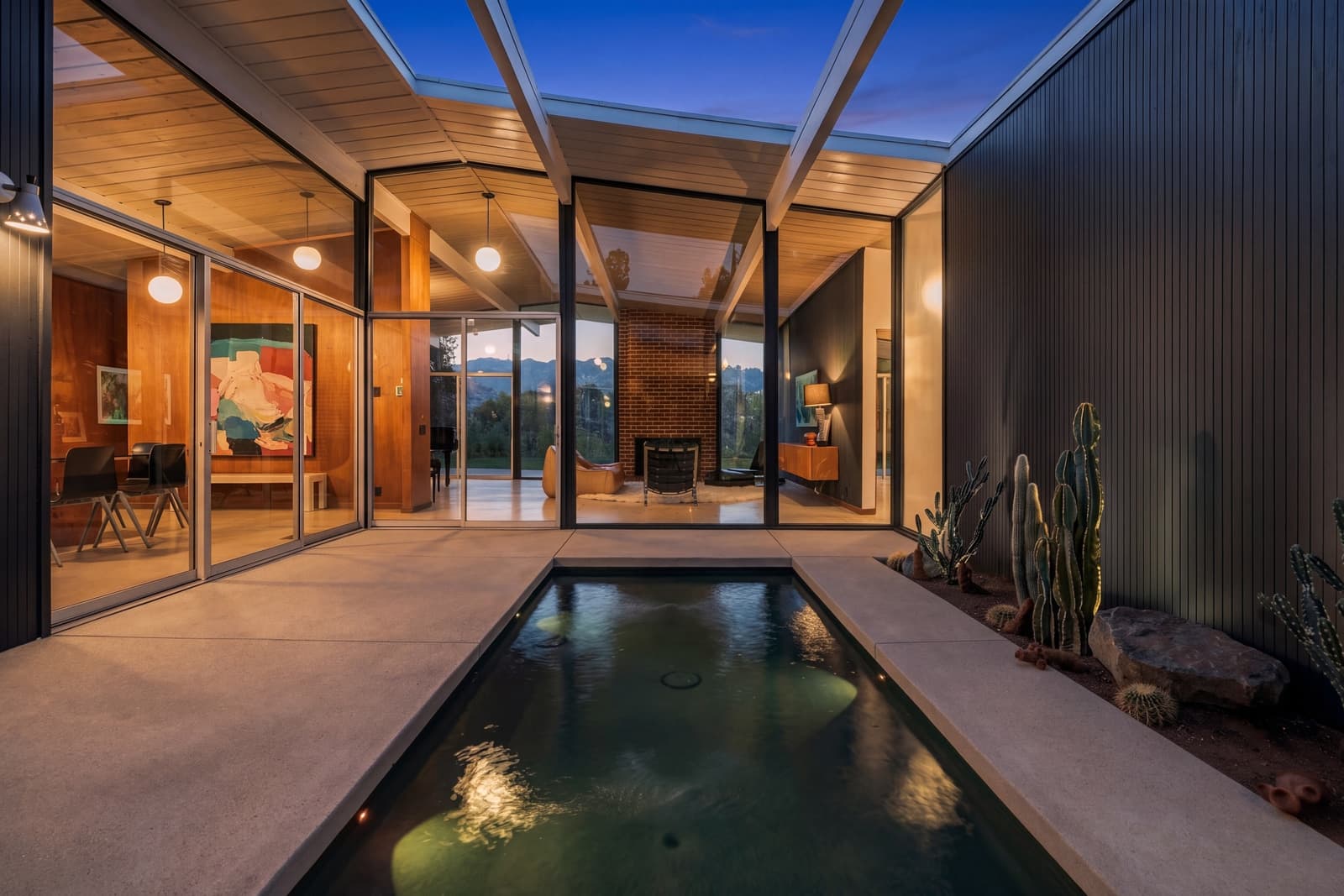
An Eichler buyer already knows what an Eichler is. They aren't shopping for square footage. They're shopping for the atrium, the post-and-beam ceilings, the glass walls and the light. So the media has to lead with the architecture, keep every line straight, show the details that make the house what it is, and finish at real twilight, when the glass does what it was designed to do. Here's how we approached a Granada Hills Eichler we shot.
Who buys an Eichler, and what they look for first
Mid-century buyers are some of the most design-literate in LA. Many of them have toured a dozen of these homes, follow architecture accounts and know the difference between an original ceiling and a replacement. They scroll the listing looking for proof that this one has the good stuff: an open atrium, tongue-and-groove ceilings, intact beams, a wall of glass onto the yard.
That changes the job. A standard shoot walks through every room at the same angle. An Eichler shoot is closer to architectural photography: fewer, more deliberate frames that make the design legible. If you've read our Bird Streets case study, it's the same idea. Find what the buyer is really paying for, then build the shot list around it.
Lead with the atrium
The atrium is the signature of an Eichler, and it's usually the hero image. It shows the plan in one frame: the house wrapped around an open-air room, glass on every side, and a view straight through to the living spaces. On this home the atrium also held a plunge pool and a cactus garden, so it carried the cover shot at dusk.
Two tips if you're prepping one. Clean the glass on both sides, because the atrium shot looks through two or three panes at once. And keep it nearly empty. A pair of chairs reads as intentional. A full patio set hides the floor plan the buyer came to see.
Keep every line straight
Post-and-beam ceilings and floor-to-ceiling glass are unforgiving. If the camera tilts even slightly, the beams start to converge and the walls lean, and a design buyer notices right away. We shoot these homes with vertical lines kept vertical and the camera lower than you'd expect, so the ceiling planks run cleanly toward the glass instead of crowding the top of the frame.
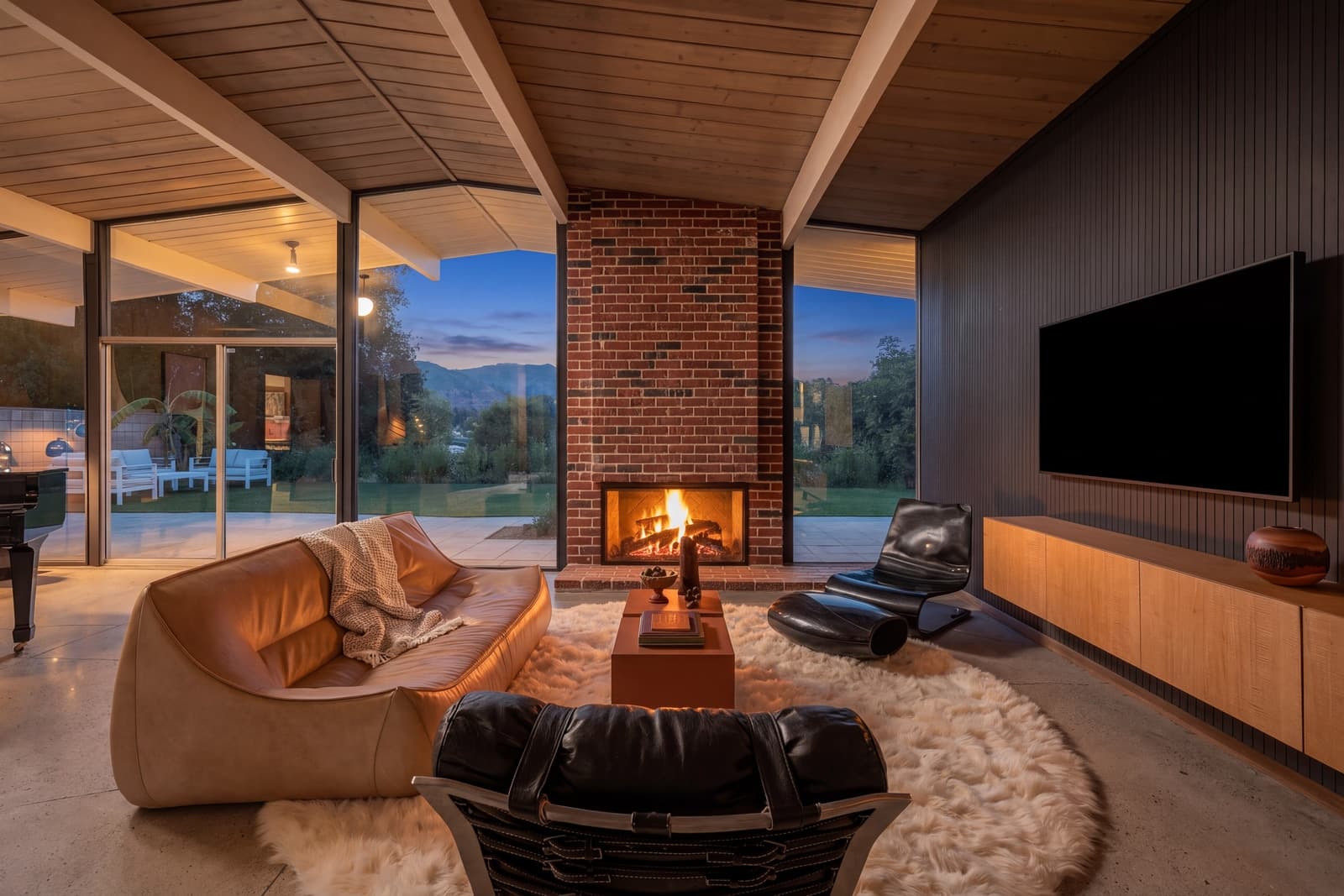
We also pick fewer, wider angles that explain how rooms connect. In an Eichler the living room, dining room and kitchen often share one long ceiling. A frame that shows that run of beams tells the buyer more than three tight room shots.
Show the details that make it an Eichler
Original or carefully restored details are a big part of the value. On this shoot that meant the brick fireplace, the wood ceilings, the wall paneling and a kitchen with bold yellow cabinets under globe pendants. Each one got its own frame or a detail shot.
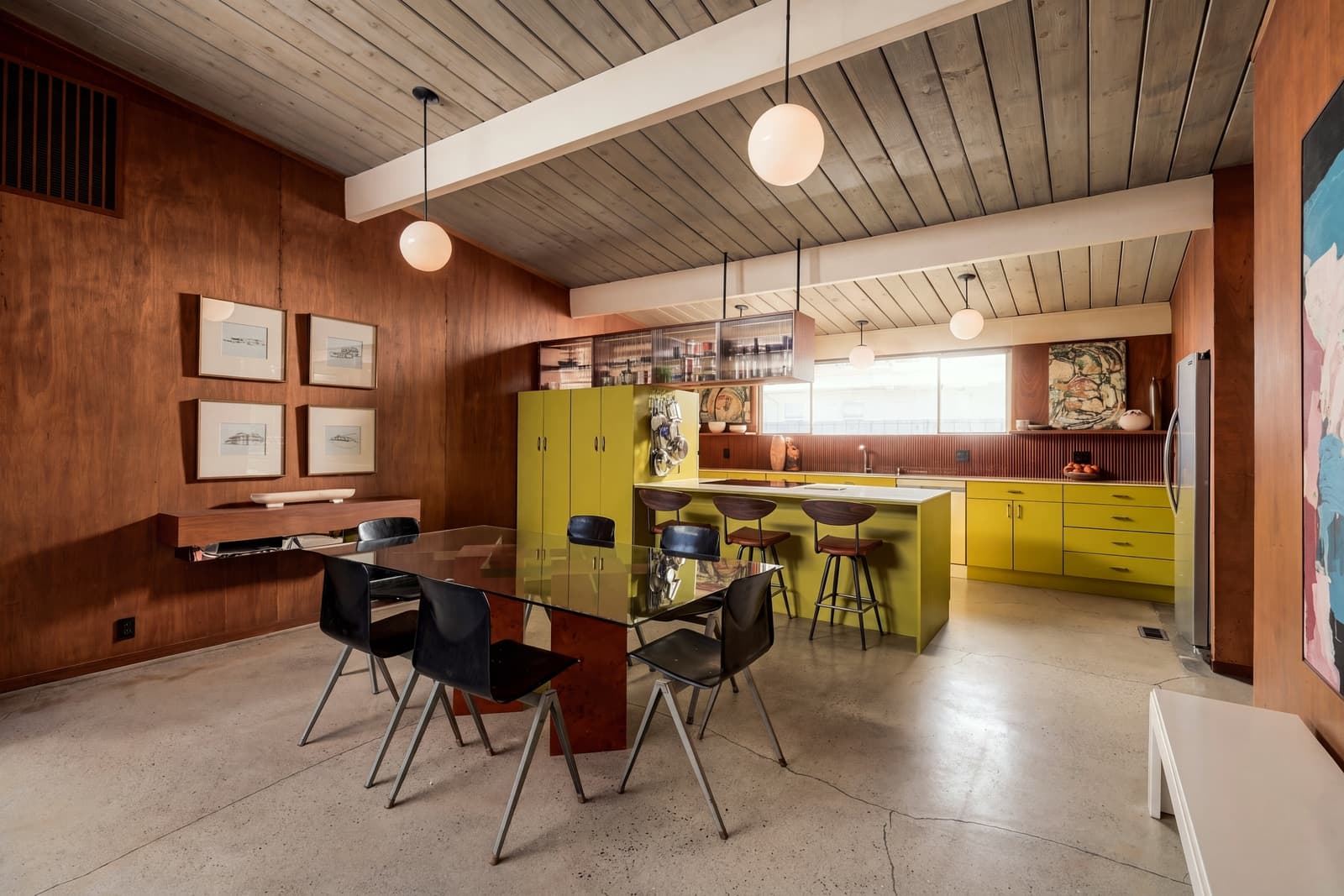
We keep color true to life. Buyers will see the house in person, and a kitchen that looks orange online and yellow in real life costs you trust at the showing. If a room needs furniture, virtual staging works well on mid-century homes with period-appropriate pieces, and we label every staged frame.
Why real twilight matters more on an Eichler
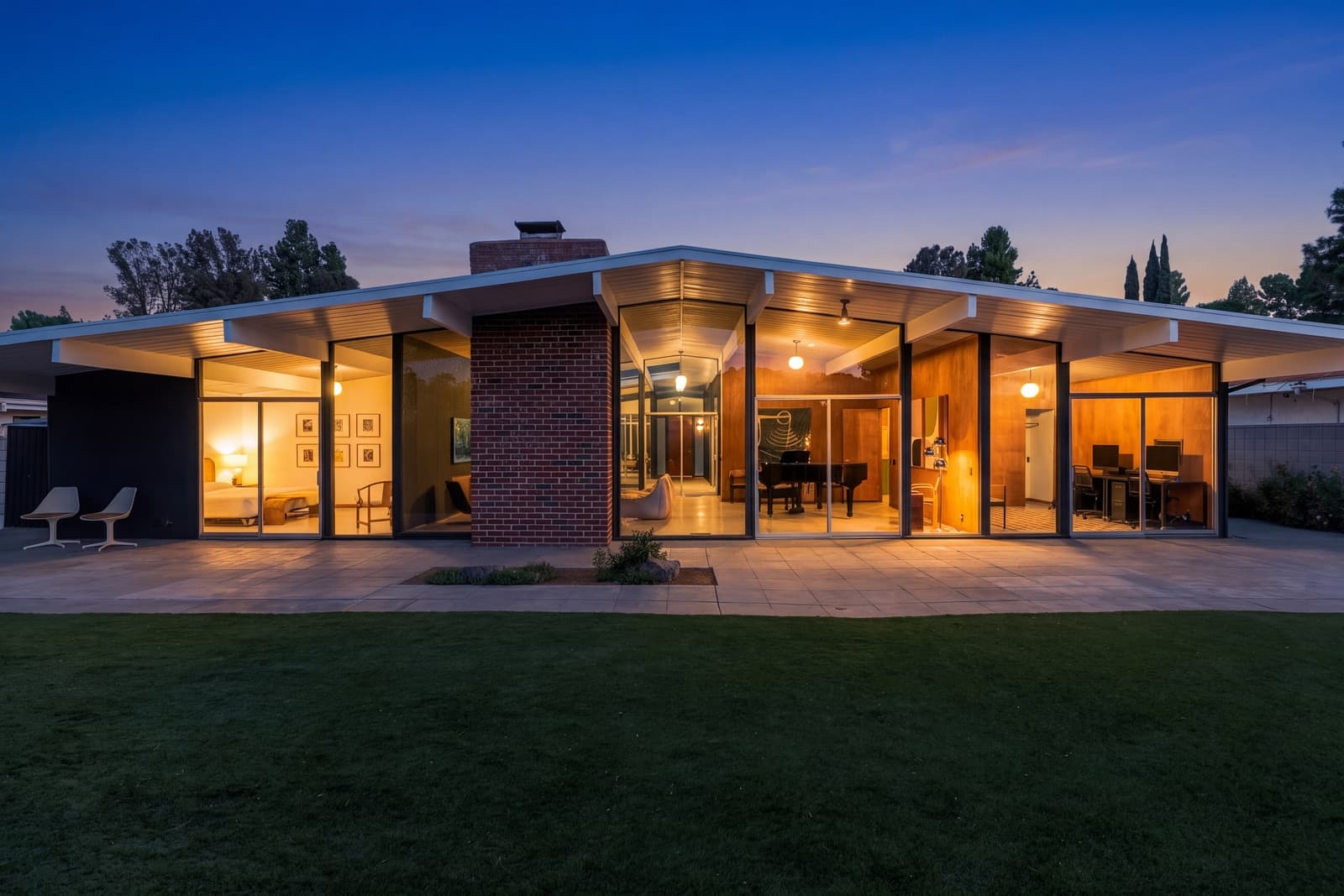
From the street, many Eichlers show almost nothing: a low roofline, a garage, a mostly solid wall and a front door. That's by design, since the house opens to the back and the atrium. In daylight the front can look closed off. At twilight the clerestory windows and the door glow, and the facade suddenly reads as warm and intentional.
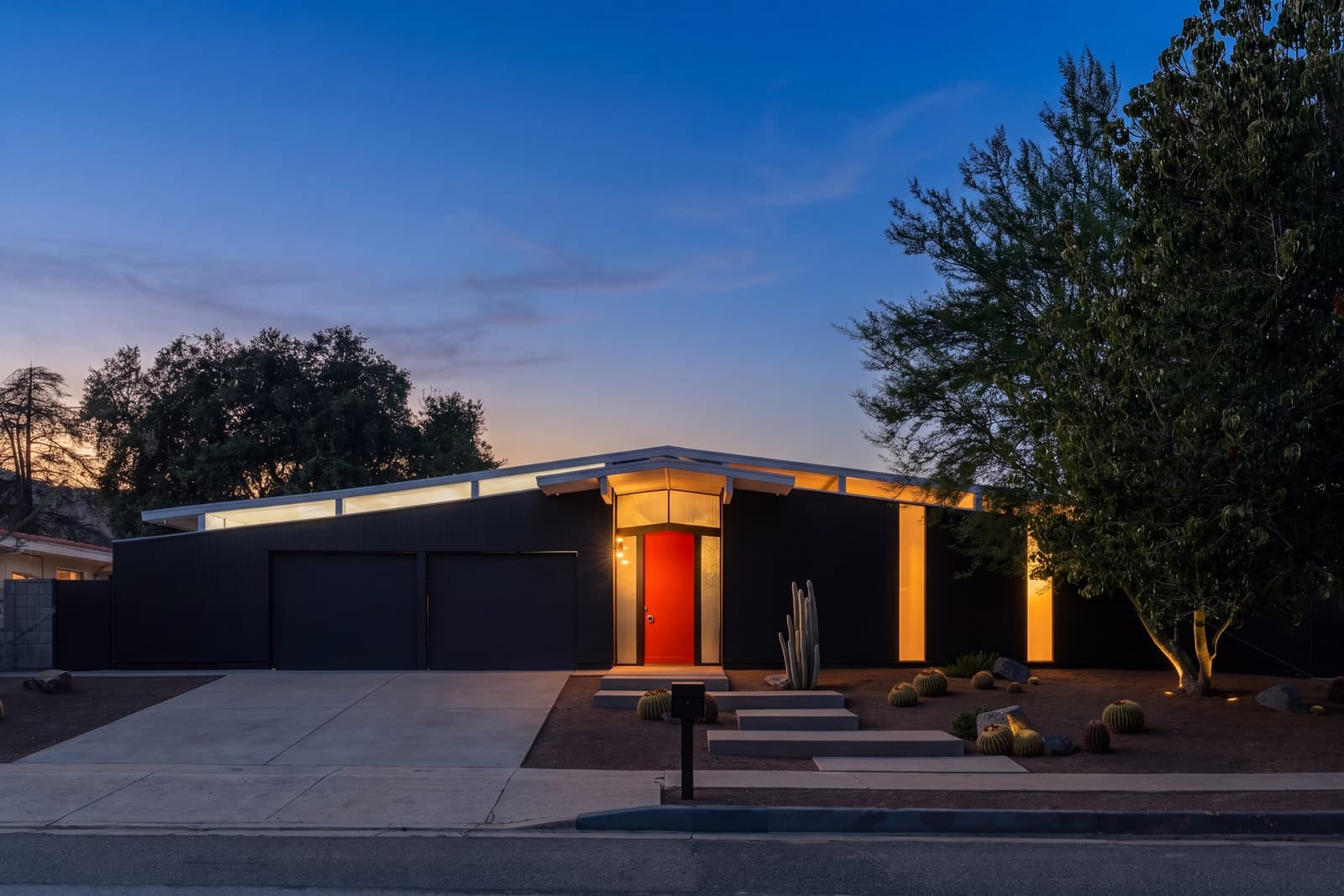
The back of the house is the opposite. It's mostly glass, and at dusk the whole rear wall lights up like a lantern. That's the frame that sells the indoor-outdoor life these homes were built around. We shot this home at real twilight, with every light on. For timing and when it's worth it, see our guide to twilight photos in LA.
Where video fits
We also made a listing film for this home. Video does one thing stills can't: it walks the buyer from the front door into the atrium and through the glass to the living room, so they feel how the plan flows. For a design-led listing, a short film that moves slowly and lets the architecture breathe usually beats a fast, trend-driven cut. Our film vs. reel guide explains which one fits which listing.
What a shoot like this costs
This is the kind of listing our Signature package was built for. Signature starts at $2,000 and includes the Signature Film and real twilight along with the photos. If the budget is tighter, Premiere starts at $1,100 and includes a film or reel, drone, a Zillow 3D tour, a floor plan and 4 virtual twilight images. Stills, drone and 3D land the next morning. You can compare everything on our pricing page.
Frequently asked questions
What's the best hero image for an Eichler listing?
Usually the atrium, shot from inside looking across to the glass walls. It shows the plan in one frame. A real twilight frame of the rear glass wall is the other strong choice, especially if the atrium is small.
Should an Eichler listing get real twilight photos?
In most cases, yes. Eichler fronts can look closed off in daylight, and the glass walls at the back come alive at dusk. Real twilight is included in our Signature package. Premiere includes 4 virtual twilight images, which we label as digitally enhanced.
Do you change colors or edit out original details?
No. We keep color true to life and keep the home's details as they are. Buyers will see the house in person, so the photos should match. Any virtual staging or sky replacement is labeled.
Can you shoot the photos, film and twilight in one visit?
Yes. We start the interiors and film in the afternoon, move outside as the light drops, and finish on the twilight frames. The seller plans around one appointment.
Mid-century listings
Give the architecture the shoot it deserves.
Book a Signature shoot for real twilight and a listing film, or start with Premiere. Photos land the next morning.
Book your LA shoot →